Table of Contents
- Pilates vs Yoga for Back Pain: What the Difference Really Means
- Pilates for Lower Back Pain: What It Targets and Who It Suits
- Yoga for Lower Back Pain: Benefits, Poses and Cautions
- Gentle Pilates for Back Pain: A Starting Point for Sensitive Spines
- Physiotherapy for Back Pain: When Clinical Support Beats a Class
- Matching Your Back Pain Type to the Right Approach
- Finding Classes and Clinical Options in Hemel Hempstead
- Conclusion
- Frequently Asked Questions
Last Updated: October 4, 2026
Pilates vs Yoga for Back Pain: What the Difference Really Means
Pilates vs yoga for back pain in Hemel Hempstead comes down to one practical distinction: Pilates builds controlled strength through your trunk and hips, while yoga pairs gentle movement with breathing and relaxation.
At What’s On In Hemel Hempstead, we hear the same question from residents every week: which class should I actually book?
Pilates is a low-impact exercise method that trains the deep abdominal and spinal muscles to support your back during everyday movement. Yoga combines physical postures, breathing and mindfulness, with a stronger focus on flexibility and stress reduction.
That is the honest answer most class listings skip.
Pilates for Lower Back Pain: What It Targets and Who It Suits
Pilates for lower back pain works on a simple principle: a spine that is supported by strong, well-controlled trunk and hip muscles tolerates everyday movement better.
The mechanism matters because most non-specific lower back pain is not caused by a single damaged structure.
It tends to suit you if:
- Your pain eases when you lie down or change position
- You have been told your core is weak or your posture is poor
- You want to rebuild strength gradually after a period of inactivity
- You prefer structured, repeatable exercises you can also do at home
- You find that slow, deliberate movement is more comfortable than stretching
It suits you less if your pain is severe, constant, or comes with numbness or weakness in a leg. That combination needs a physiotherapist’s assessment before any class.
Mat vs Reformer: Which Format Helps Back Pain Most?
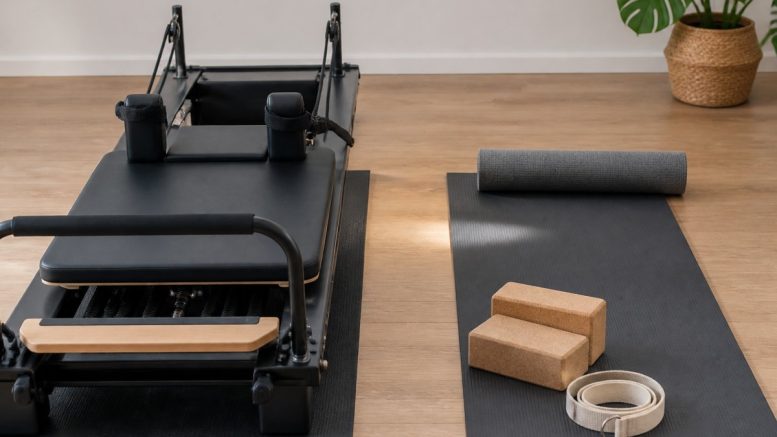
Mat classes use your body weight and small props, and they are cheaper and easier to fit into a week. Reformer classes use a sprung carriage that supports part of your weight, which many people with sensitive backs find easier to start with because the springs can assist a movement that would otherwise be too demanding. A common mistake is jumping straight into a fast group mat class when a slower, smaller session would serve you better.
A useful way to think about the formats:
- Mat, large group, cheapest per session, least individual attention, best once your back is settled and you know your modifications.
- Mat, small group, a middle ground, usually capped at around six to ten people so the instructor can watch everyone.
- Reformer, small group, more support from the springs, higher cost, good for building tolerance when mat work still feels like too much.
- One-to-one clinical Pilates, the most adapted option and the most expensive, usually the right starting point after an injury or a long flare-up.
How a Session Is Adapted for a Sensitive Back
Adaptation is not about doing less; it is about changing the leverage, range and support so the same pattern can be trained safely. Common adjustments include:
- Placing a cushion or rolled towel under the pelvis or knees to reduce strain
- Reducing the range of a leg lift or bridge until the pelvis stays still
- Switching from a loaded position to a supported one, such as side-lying instead of standing
- Slowing the tempo and reducing repetitions so control, not fatigue, ends the set
- Using breath as the cue, exhaling on effort helps the deep abdominal muscles engage
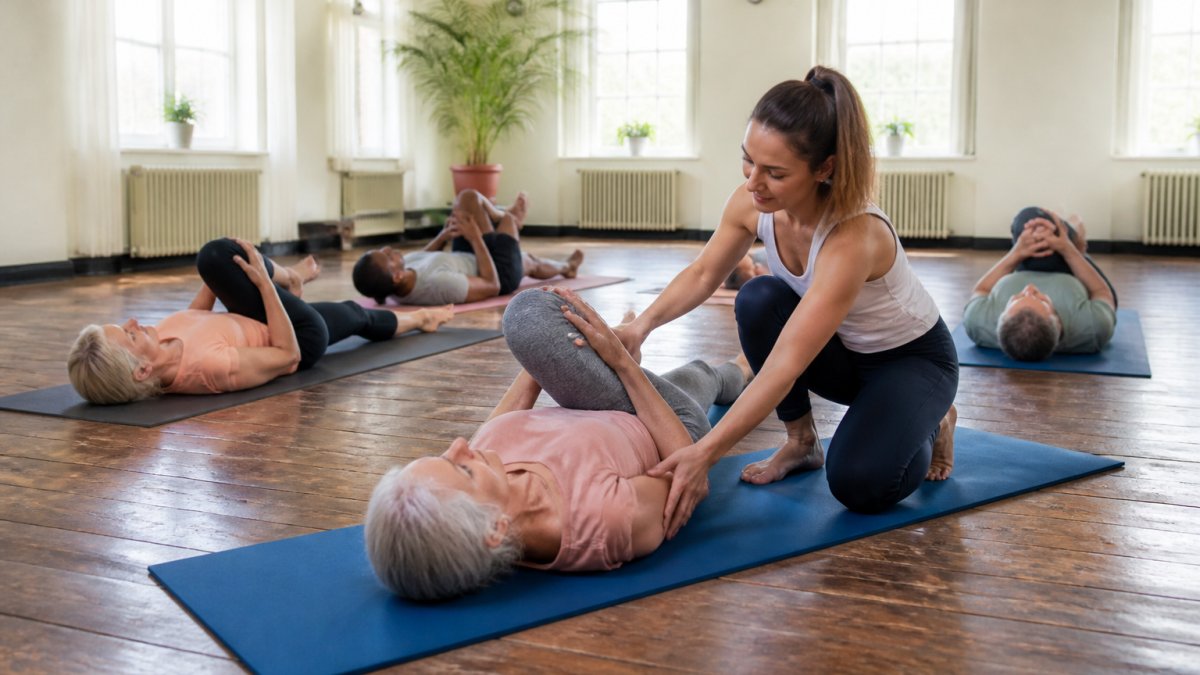
Ask the instructor before booking whether they hold a clinical Pilates qualification. Instructors with that training are used to adapting exercises for people with diagnosed back conditions, and they will usually ask about your symptoms first. It is also worth asking how many people are in the class and whether they offer a one-to-one induction before you join a group.
Realistic Expectations
Pilates is not a cure and it is not fast. Most people notice that daily movements feel easier before they notice any change in the pain itself, and progress is usually measured over weeks rather than sessions. Two short sessions a week, done consistently, tends to beat one long session you dread. If your pain is worsening rather than settling, that is a signal to get assessed rather than to push harder.
Yoga for Lower Back Pain: Benefits, Poses and Cautions
Yoga for lower back pain helps mainly through gentle movement, stretching and slower breathing, which reduces the tension many people carry in their lower back and hips. Research into movement-based approaches for back pain generally supports staying active over resting, and yoga is one of the more accessible ways to do that.
The catch is that not every pose is friendly to a painful back.
Poses That Commonly Aggravate Back Pain
Deep forward folds, seated twists and unsupported backbends are the usual culprits. They load the lower spine in positions that many people with disc-related or facet joint pain cannot tolerate.
If a pose produces sharp pain, tingling or pain that travels down a leg, stop. That is not “working through it”. Tell the teacher and take the modified version, or sit the pose out.
Skipping the warm-up and going straight into deep stretches is the most common way people leave a yoga class worse than they arrived. Arrive early, tell the teacher about your back, and take the gentler variation every time.
Gentle Pilates for Back Pain: A Starting Point for Sensitive Spines
Gentle Pilates for back pain is the right entry point if your back is currently sensitive or you have not exercised in a while. It usually means fewer repetitions, more support under the pelvis and knees, and a focus on breathing before movement.
A typical starting session looks like this:
- Breathing on your back with knees bent, feeling the lower ribs move
- Pelvic tilts, small and slow, to mobilise the lower spine
- Heel slides, one leg at a time, keeping the pelvis still
- Supported bridging, only if it feels comfortable
- Side-lying leg lifts to build hip stability
Two or three short sessions a week beats one long one. Consistency matters more than intensity when you are rebuilding tolerance.
Physiotherapy for Back Pain: When Clinical Support Beats a Class
Physiotherapy for back pain is the better route when your symptoms need a diagnosis, not just a class. A physiotherapist can assess what is actually driving the pain, then build a personalised treatment plan around it.
Book an assessment rather than a class if you have:
- Pain that has lasted more than six weeks without improving
- Numbness, pins and needles or weakness in a leg
- Pain that wakes you at night
- A history of back surgery or a diagnosed condition such as a disc problem
- Difficulty with basic daily tasks
The NHS guidance on back pain sets out when to seek urgent help, including loss of bladder or bowel control and numbness around the groin. The Chartered Society of Physiotherapy also explains what to expect from a physiotherapy assessment and how to find a registered clinician.
Matching Your Back Pain Type to the Right Approach
Choosing between the two comes down to what your back actually does. Use this as a rough guide, then confirm it with a clinician if you are unsure.
| Your pattern | Better starting point | Why |
|---|---|---|
| Stiff, achy, worse after sitting | Yoga | Gentle stretching and movement variety |
| Pain with bending or lifting | Clinical Pilates | Builds trunk and hip support |
| Pain flares with stress and tension | Yoga | Breathing and relaxation work |
| Post-injury, low tolerance | One-to-one clinical Pilates | Fully adapted, closely supervised |
| Long-term condition, needs a plan | Physiotherapy first | Assessment before exercise |
| Generally fit, wants both | Either, then mix | Strength plus flexibility |
Most people end up combining the two: Pilates for strength, yoga for mobility and stress reduction. That is a sensible long-term approach, not a compromise.
Finding Classes and Clinical Options in Hemel Hempstead
Finding the right class locally means checking three things: the instructor’s qualifications, the class size, and whether they will adapt exercises for your back. Smaller classes and one-to-one sessions cost more, but they are worth it while your back is still settling.
Questions to Ask Before You Book
A short phone call or email before booking saves weeks of trial and error. Ask:
- What qualification do you hold, and is it clinical Pilates or general mat Pilates?
- How many people are in the class, and do you offer a one-to-one induction first?
- How do you adapt exercises for someone with a diagnosed back condition?
- Do you ask about symptoms and medical history before the first session?
- What is your cancellation policy if my back flares and I cannot attend?
- Do you run online or hybrid sessions for weeks when travelling is difficult?
If an instructor cannot answer these clearly, that is useful information.
Comparing Your Local Options
Broadly, you are choosing between four routes, and each has a different trade-off between cost, supervision and suitability:
- General group mat or yoga class, lowest cost per session, least individual attention, best once your back is settled and you know your own modifications.
- Small-group Pilates or yoga, a middle ground, usually capped so the instructor can watch everyone; a good fit for most people rebuilding tolerance.
- One-to-one Pilates or yoga, fully adapted and closely supervised, highest cost, the sensible starting point after an injury or a long flare-up.
- Physiotherapy-led exercise, assessment first, then a personalised plan that may include Pilates-style or yoga-style movement; the right route when you need a diagnosis rather than a class.
Many instructors now run both in-person and online sessions, which helps if your pain varies week to week. Online works well for gentle mat-based work; it works less well for reformer or hands-on cueing.
What to Look For in a Local Instructor
Our local events and activities listings cover fitness and wellbeing options across the area, alongside community groups and leisure activities. We also list local news and weather so you can plan around your week.
If you run a studio, clinic or fitness business in the area, we offer advertising opportunities to showcase what you offer to local residents. Contact us to find out more.
Conclusion
Back pain rarely has a single fix, and the honest answer is that neither Pilates nor yoga replaces proper assessment when something is genuinely wrong. Start gently, tell your instructor about your symptoms, and get clinical input if things are not improving.
What’s On In Hemel Hempstead brings together local fitness, wellbeing and community listings in one place, with local news and weather alongside them.
Frequently Asked Questions
Is Pilates or yoga better for back pain?
Neither is universally better. Pilates tends to focus on controlled core and spinal stability, which suits people whose back pain flares with sudden movement or lifting. Yoga often emphasises flexibility, balance and breathing, which can help stiffness and stress-related tension. The right choice depends on your symptoms, your current mobility and whether a clinician has assessed you. Many people benefit from trying a beginner class of each, ideally with an instructor who has experience working with back pain.
Can yoga make back pain worse?
It can if you push into deep forward folds, unsupported twists or backbends before your spine is ready. Sharp or shooting pain during a pose is a signal to stop, not stretch further. Tell your teacher about your back pain before class so they can offer modifications such as blocks, a bolster or a chair. If pain persists for more than a few days, or comes with numbness or weakness in the legs, seek assessment from a physiotherapist or GP before continuing.
Should I see a physiotherapist before starting Pilates or yoga for back pain?
If your pain is new, severe, recurring, or linked to a long-term health condition, a physiotherapy assessment is sensible before joining a class. A physiotherapist can identify what movements aggravate your symptoms and recommend a personalised programme, which may include clinical Pilates. For mild, familiar aches that ease with gentle movement, a beginner-level class with an experienced instructor is often a reasonable starting point. Stop and seek advice if symptoms change.
How often should I do Pilates or yoga for back pain?
Little and often usually works better than one long session. Many instructors suggest two to three short sessions a week, building gradually as your strength and confidence improve. Consistency matters more than intensity, so a 20-minute gentle Pilates routine at home can be more useful than a single demanding class. If you are working with a physiotherapist, follow the frequency in your personalised treatment plan and review it as your mobility improves.