Table of Contents
- Why Private Personal Training Costs More Than You Think
- Quick Comparison: Affordable Personal Training Options
- Group Fitness Classes in Hemel Hempstead: Split the Cost, Keep the Coaching
- Cheap Gym Memberships in Hemel Hempstead: What You Actually Get
- Small Group Training: The Hybrid Model That Cuts Costs
- Online Coaching and Fitness Apps: Professional Guidance From Home
- How to Choose the Right Alternative for Your Goals
- Frequently Asked Questions
Last Updated: September 30, 2026
Why Private Personal Training Costs More Than You Think
Private personal training is one of the most expensive ways to get fit, and the cost has little to do with how much the trainer helps you. You are paying for one person’s undivided attention. This guide from What’s On In Hemel Hempstead covers the affordable personal training routes that deliver qualified fitness professionals, structured exercise programmes and real accountability without the one-to-one price tag.
A trainer’s hourly rate is fixed, and they can only train one client at a time. That hour has to cover their time, insurance, certification and travel, so the fee lands entirely on you. Split the same hour between three or four people and the cost per head drops sharply while the coaching stays intact.
The expensive part of personal training is the exclusivity, not the expertise. Strip out the exclusivity and you keep the guidance.
Most people assume a cheaper option means sacrificing quality. It does not. Below, we break down the realistic alternatives, what each costs in money and attention, and how to pick the one that fits your goals.
Quick Comparison: Affordable Personal Training Options
The right alternative depends on how much human feedback you need versus how much you are willing to pay for it. Here is the honest breakdown.
| Option | Cost Level | Human Feedback | Best For |
|---|---|---|---|
| Group fitness classes | Low | Group-level | Motivation and routine |
| Cheap gym memberships | Low | None | Independent training |
| Small group training | Medium | Direct, shared | Form correction on a budget |
| Online coaching with a coach | Medium | Remote, scheduled | Accountability at home |
| Fitness apps | Low | None | Structured workout plans |
How We Evaluated These Alternatives
We judged each option on four things: cost per session, real professional guidance, suitability for beginners, and long-term stickability. An option that is cheap but abandoned after three weeks is not cheap at all.
Group Fitness Classes in Hemel Hempstead: Split the Cost, Keep the Coaching
Group exercise is the cheapest way to train under a qualified instructor. You pay a fraction of a private session fee because the instructor’s time is shared, and you still get guidance on technique, pacing and progression.
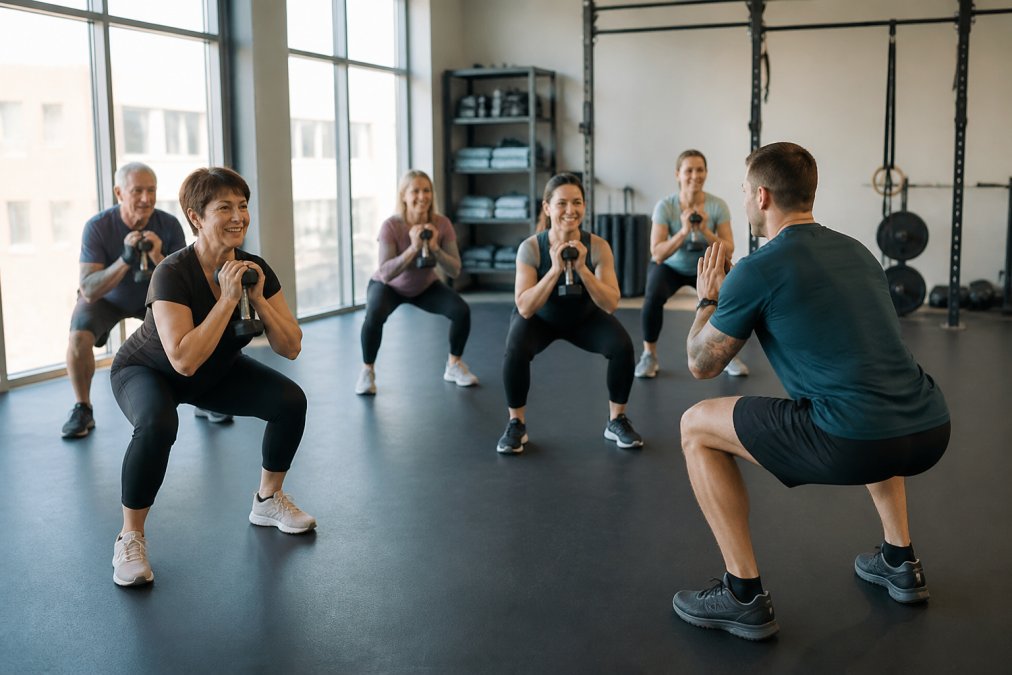
The trade-off: the instructor cannot watch only you. If you have an injury, a rehabilitation goal or a musculoskeletal issue, a general class may not fit, because the programme is written for the group.
The social side of group exercise does real work. A local fitness community keeps people coming back, and consistency moves results. A class you attend three times a week beats a private session you dread.
Look for classes offering a fitness assessment or short consultation before you join. Good providers ask about your health and fitness goals and flag whether the class suits you.
Ask the instructor before class whether they offer a scaled version of each movement. Good ones will happily give you a regression for any exercise, which turns a general class into something close to personal programming.
Cheap Gym Memberships in Hemel Hempstead: What You Actually Get
A budget gym membership buys access to training equipment, not coaching. Be clear about that before you sign anything.
What you typically get:
- Use of cardio machines, free weights and resistance equipment
- A training environment you can use whenever suits you
- Usually an induction session, sometimes a basic workout plan
- No ongoing professional guidance unless you pay extra
What you do not get is anyone checking your form, adjusting your programme or holding you accountable when motivation dips.
The hybrid model: cheap membership plus occasional coaching
A budget gym membership and a handful of personal training sessions are not competing options, they are a stack. The membership gives you low-cost equipment access, and a few PT sessions a month give you the programming, form correction and accountability the membership alone cannot.
What to ask before you commit:
- Does the gym allow you to bring in an external trainer, or must you use their in-house team?
- Can you buy PT sessions in blocks rather than committing to a monthly package?
- Is there a pay-as-you-go option for occasional sessions?
- Does the induction include a written programme you can follow between sessions?
A cheap gym membership is not a replacement for coaching, it is the base layer. Pair it with a small number of PT sessions a month and you get most of the benefit of private training at a fraction of the annual cost.
Small Group Training: The Hybrid Model That Cuts Costs
Small group training is the closest thing to a genuine affordable alternative to private personal training: it keeps the coaching and removes the exclusivity. A trainer works with two to four people at once, so the fee is split while the eyes on your technique stay largely on you.
Do not join a small group session pitched well above your current level to save money. Being the weakest person in an advanced group means the trainer spends their time on the others, and you spend your time surviving rather than progressing.
Online Coaching and Fitness Apps: Professional Guidance From Home
Remote coaching and fitness apps cover the widest cost range here, from free structured workout plans to full one-to-one online coaching. The key distinction is whether a person actually reviews what you do.
How virtual coaching actually works
Most online coaching runs on a simple loop. You film a set on your phone, upload it, and the coach replies with cues, corrections and programme changes. Between check-ins you log your sessions, and the coach adjusts the plan based on what you report. Some coaches run a weekly video call; others work entirely asynchronously.
What to look for in an online coach
- A recognised qualification and public liability insurance, the same as you would expect from an in-person trainer
- A clear description of how often they review your training and how quickly they respond to messages
- A stated process for adjusting your programme when something is not working
- Video review included, not offered as a paid extra
- A trial period or a single-month option so you can test the fit before committing
The engagement problem
Remote programmes live or die on whether you use them. A coach who checks in weekly keeps you honest; an app you ignore will not. The common failure pattern is buying a subscription, completing two weeks, then drifting because nothing external pulls you back.
Before you pay for any online coaching, ask for a sample week of programming and a sample video review. A coach who will not show you what the service looks like before you buy is unlikely to over-deliver once you have.
How much does online coaching cost?
Online coaching is generally priced below in-person one-to-one sessions because the coach is not travelling to you and can serve more clients. Costs vary widely by coach and contact level, so ask what a monthly plan covers before committing. The variables that move the price most are check-in frequency, whether video review is included, and whether you get a live call or asynchronous feedback only.
How to Choose the Right Alternative for Your Goals
Match the format to your actual constraint, money, motivation or lack of knowledge. Most people pick the cheapest option and quit; picking the right one costs less over a year.
Work through it in this order:
- Identify your real blocker. If you do not know what to do, you need programming. If you know what to do but skip it, you need accountability. If you get hurt, you need form correction.
- Check the qualification. For anything involving injury, rehabilitation or musculoskeletal health, look for a trainer with the relevant training and experience, and ask about it directly.
- Test before committing. Most formats offer a trial class, a taster session or a free week. Use it to judge the training environment and whether you actually enjoy it.
- Do the annual maths. A cheap option you abandon in a month costs more than a mid-priced one you keep for a year.
- Check the local listings. A local fitness directory will show you what is running nearby, which beats guessing.
Frequently Asked Questions
Are there low-cost group fitness classes available locally?
Yes, many leisure centres and community halls in Hemel Hempstead run pay-as-you-go group fitness classes that cost far less than private personal training. Sessions typically include circuits, yoga, spin, and bootcamp-style workouts. You can also check local community boards and fitness directories for pop-up classes. These classes offer professional guidance in a social setting, making them a cost-effective way to stay active without committing to one-on-one rates.
How can I find affordable gym memberships in the area?
Start by comparing off-peak and flexible memberships at local leisure centres and independent gyms. Many offer no-contract options or discounted rates for students, seniors, or families. Community gyms and council-run facilities often provide cheaper alternatives to private studios. It’s worth visiting a few to check equipment, class schedules, and atmosphere before signing up. You can also ask about trial passes to test the facilities before committing.
Can I find fitness apps that supplement local group training?
Absolutely. Apps like Boostcamp and Fitbod offer free or low-cost workout programmes you can follow between group sessions. They provide structured plans, video demonstrations, and progress tracking. Using an app alongside a weekly group class gives you professional guidance without the cost of private personal training. Many apps let you filter workouts by available equipment, so you can train at home or in a basic gym setting.
What are the benefits of joining a local sports club versus private training?
Local sports clubs often combine physical activity with social connection, which can keep you motivated long-term. They typically charge lower fees than private personal training and provide coaching in a team environment. For example, running clubs, rowing clubs, and martial arts groups offer structured sessions led by qualified instructors. The group dynamic can also push you harder than training alone, while still giving you access to professional guidance.